Friday, May 29, 2009

"I Will Survive"


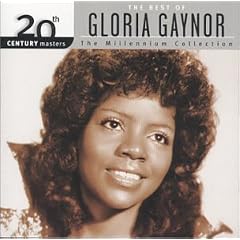
I chose Gloria Gaynor's "I Will Survive" to compare to Cake's cover of the song. The main difference is in the original a woman is singing it and in the other a man is. When Gloria sings this song she sounds strong like she is empowering women. The message I get is, "I'm not that weak, passive woman you think I am." She is telling someone off; telling them to leave and she will be fine without them.

In Cake's cover, after watching the music video, I don't think their meaning was the same. It changed in the sense that he was not talking about a woman leaving and he'd survive, I think it was more like he would survive against the world; just life in general. It's a more modern version of "I Will Survive" with catchy guitar riffs and jams throughout the song compared to the things that were popular in the disco era. The lead singer sounds almost monotone and apathetic while singing the lyrics, but it's interesting how everytime I sing-a-long I still put emphasis in the song, or certain parts that sound so powerful, because they lyrics are still strong. There are no changes in the lyrics but one added cuss word to put a little accent on the lock he should have changed.

Gloria's original is so upbeat and just makes you want to move and shout out the lyrics. Cake's version makes you want to do a sort of mosh pit movement or almost feel self-pity at how pathetic the voice is singing. I love both versions though!! I can relate to both messages and plus it's just catchy and fun!

Tuesday, May 26, 2009

Jeanette Winterson's "Written on the Body"

As a college student who is not use to reading love novels yet, it took me a while to get into the language; it was almost foreign to me. It was so descriptive; sometimes too much for me, but I was amazed at the way the author could go into detail about anything. I felt like I could have said, "Describe a piece of paper," and had at least 3 full pages of descriptive writing about a piece of paper.

As a critic, the language was marvelous and lustful. It was not vulgar or pornographic, just the language of love expressed with compassion and detail. Everyone should pick up this book and learn how to impress your partner with a supreme language that could only make you feel special when geared toward you.

But when I look at it from a young woman's aspect, the story was so full of emotions and feelings I think everybody goes through, like questioning what you are doing especially when you feel like you have made the same mistake before. Every relationship the main character had was a unique one, but she seemed very certain that this latest one, Louise, was the one. I could actually vision in my head what she looked like, what they looked like together; the word play but a movie in my head.

Writing a review though... There is no better forbidden love story! The plot takes you on a quest of true love that seems impossible to have and right when it is in the main character's grip it is focefully taken away from her. She suffers like all of us have and that's what makes the story so relatable.

What I have learned so far, in every story there has to be something that goes wrong, and in this love story it's cancer. I felt her heartbreak when she discovered that she thought she had to make the "good" decision by leaving her with Elgin so he could take care of her. The logic made sense to me but if I felt the way she did about Louise there is no way I would disappear to make her go through this alone, let alone with the person she supposedly despises.

In a more critical way, the main character is faced with such a diffucult decision that she disappears from Louise, the person she loves, in order to help her. The dialogue going through her head draws the reader in; she is full of doubt, pain, sorrow, longing. The book keeps you on your toes, waiting impatiently to turn to the next page, to see if she will every make a move to chase down the woman she loves and return to her side in this horrible tradgedy that has ruined their chance of love.

I got the impression that the main character was very promiscuous. There were tons of references of previous flings and relationships. I was kind of surprised at how many lesbian relationships she had. I don't know if this is a stupid question, but I kept asking myself, "How does a lesbian know that another woman is a lesbian?" How do you approach that situation because I guess I'm making the assumption that there is an overwhlemingly larger population of heterosexual women then homosexual, but maybe I'm wrong.

Review: You can tell this woman can be characterized as a lover. She writes about mistakes and lessons learned from previous relationships she has held. She's experienced in this field, but still has no idea what she is doing with Louise. Dive into her uncertainty, but yet very certain; the thought process of a lover's heart and brain. This book is intense; everything about it-- the words, the relationships, the situations, the feelings. It sucks you in regardless of if you want to be surrounded by the plot or not; you're helpless because of the luscious language.

Sunday, May 10, 2009

Mariko and Jillian Tamaki's "SKIM"


This story epitomizes high school years for those students who are trying to figure out who they are and yearning to feel wanted. It's not so typical though that a female student fall for her female art teacher and that's what made the plot interesting.

This book defies social norms we all grew up learning; what's right, what's wrong, what's expected. The main character Kim, nicknamed Skim, asks herself questions like the ones listed above while trying to find out why she always feels so awkward. She doesn't fit in with the popular clic, her bestfriend is kind of a freak, she seems backward because to me she just didn't feel comfortable in her own skin.

On her quest for love, she does what all young people do when they're first starting to develop for another. She panics and she doesn't know how to handle it especially since her first love isn't like anybody else's in her school.

At the end of the book she befriends a popular girl who is dealing with the suicide of her boyfriend. I think this symbolized her being able to relate to someone, not because of the actual suicide, but because the rumor was he did it because he was gay. Skim doesn't focus on trying to comfort Katie by bringing up her boyfriend every conversation. She just talks to her like a normal person and it makes Katie feel better by not having to deal with that considering that's all her other friends talk about.

This book is about the journey of discovering yourself.

Monday, May 4, 2009

An Image of a Desirable Woman

I think in this picture Eva Longoria depicts a woman of desire. Obviously because she's attractive, but I think her confidence shines through too, which from a woman's perspective is desirable in my opinion.

Sunday, May 3, 2009

Jessica Abel's "La Perdida"


When I first flipped open this book I was surprised to see how it resembled a comic book. I wasn't looking forward to reading it at all because I was never into comics when I was younger and thought I definitely would dread trying to read La Perdida. My roommates even commented on it when I was reading while we were laying out, "Oh my God! Are you reading that for fun?!" I even felt like I had to defend myself because for some reason I felt like graphic books were for nerds eyes only.

But to my surprise, I enjoyed the book. It was easier to see what the characters looked like instead of just imagining what they would look like from just text and it was just more entertaining than staring at text. It took me a while to figure out how to go about reading it, like what box do I go to now, what bubble do I read first to make their conversations make sense? After a few pages it just seemed to come naturally and easier to follow.

The plot was interesting because Carla, the main character, wanted to see her roots and experience her heritage. She wanted to "become" more Mexican, and I think that's something that everybody can relate to. We all want to know about our family history, the customs, the stories. But of course the story wouldn't be interesting if she didn't run into a few problems along the way!! You know how when you're watching a scary movie and you're screaming at the television, "You're so stupid!! Nobody is dumb enough to do that in real life!" Well, I found myself thinking that a lot with some of Carla's actions.

I wish I had more background information of history about Mexico so I could understand Memo's anger toward Americans. I found it annoying and wanting to skip over his bubbles sometimes when he was ranting about communism every other page. He needed to chill, but maybe there's something I don't know about where he has the right to be angry, but I doubt it should be included in every conversation he has.

The story took me on a tour through Mexico and how they potentially think of Americans. After just reading Gloria Anzaldua's article, "La Conciencea de la Mestiza: Towards a New Consciousness," I beleive that there is some hostility between Mexican culture and ours, and there is hostility, or what I would just say is ingornace, between many cultures because of differences. This book conveys that as well.

Sunday, April 19, 2009

Laura Esquirel's "Like Water for Chocolate"

I absolutely loved this book! I couldn't put it down! I think that the love story and plot are so enticing, and I love the fictional, magical aspects used throughout the novel. I think the main character, Tita, has such a genuine personality and it's unfortunate that she has to deal with her unfair family traditions.
The love between Tita and Pedro reminded me of Romeo and Juliet, both are young and so infatuated with each other without actually knowing the other person that well. It was shocking to see them actually marry at the end; I didn't expect that their love was true and going to last as long as it did.

How the author, Laura, Esquirel, incorporated a unique recipe in every monthly chapter was interesting because there was always a significance about whatever dish Tita was serving. My two favorite characters in the book were the two cooks, Nacha and Chencha, who I felt cared more about Tita than her own mother did.
There are many examples of love and desire in the book. Tita and Pedro have such a desire for each other; I haven't decided if it was just lust in the beginning or really some connection... I think all the family members loved each other very much but they weren't big on showing emotions; there "Mami" wanted them to never cry so they would look strong.
Anyways, I recommend this book!!

Sunday, April 12, 2009

Toni Morrison's "Love"

Toni Morrison doesn't define love in this book because there is no one simple definition. She shows her readers all the aspects of love; how it can be pleasant and how it can be poisonous. Morrison has characters who are seductive and passionate because of love, and others who are broken-hearted and bitter from the most complex human emotion. I find it fascinating how she incorporates all these different forms of love and how it can affect individuals. People are driven by it; everybody wants it, but some throw it away when they really want to protect it.

One way she depicts desire is with a young lustful couple who are obsessed with each other. They're constantly on each other's minds; practically always sexually. They thrive off passion and security. Their desires make them happy. But there is another example of desire littered throughout the story-- the relationship between Heed and Christine. Both constantly want to have the full attention of Bill Cosey. Fighting for the desire to be his "lil Cosey child." This desire eventually drives them insane not knowing who which one he was referring to on his will. Formerly best friends, this desire drives them apart; creates tension and anger; almost death.

Race plays a huge role in the plot. Morrison takes the reader back in history to show what it was like being an African American in a time period when civil rights movement was occuring. And in this time period, Bill Cosey marries an eleven-year-old girl, Heed, when he is in his fifties. I don't know if this was a normal occurence back then, but I think Morrison wrote the story like this to show how he stole her innocence and how "love" was thought of at such a young age-- so oblivious.

This book took me through a tour of love, as if I was walking around in a love grocery store looking at all the different brands that are out there. Some I could relate to, others I couldn't even imagine. I think the point of her book was to show what such a strong emotion can do to your life and how it controls you, and in this case how long it can affect you even if the person is dead and gone.

Sunday, April 5, 2009

"The Myth of the Vaginal Orgasm"

While reading Anne Koedt's "The Myth of the Vaginal Orgasm" I noticed some key terms she used throughout her article were frigidity; stimulation; deception; confusion. I typed the word 'frigid' into dictionary.com and was surprised that they actually had this definition: "sexual unresponsiveness (especially of women) and inability to achieve orgasm during intercourse ," along with the other meanings of cold, bitter, etcetera. I thought the wordplay of women not "achieving" an orgasm made it seem like if you don't get an orgasm than you have done the opposite-- failed? I think in her article she was trying to show exactly the opposite of the meaning that dictionary.com provides for frigidity. She was doing women a favor in writing this to explain that if some women don't have consistent orgasms, or none, doesn't mean there's something wrong with them. By using words such as deception, myth and confusion she was letting the audience know that obviously women are being told something other than the truth about their sexual stimulation. I thought it was really interesting how she pointed out that all the "standard" positions are more favorable to the men, and how it is not as equally stimulating for both.

In my own terms, Koedt is saying that women need to know about their bodies; know that there is more to sex than "standard" positions; and you should tell your partner that you want to be treated equally when it comes to climaxing. When she goes on to give reasons of why men maintain the myth of the vaginal orgasm, every excuse/reason had something to do with the male ego, like they just couldn't let women partake in any of the pleasure too or it was all meant for just them. It's disturbing how some cultures even go as far to remove the clitoris so there is not even a chance of pleasure. By providing this information to the audience, in my own terms, she is trying to anger women. You can't write almost 4 pages of why men won't let this myth go and not trying to be instilling anger in somebody.